Most contractor websites are brochures. They list services, show a logo and sit there. A site that wins jobs does three things instead: it proves you did the work, it loads before a homeowner loses patience, and it makes calling you the easiest thing on the page.
The difference is not usually design talent. It is whether the person who built the site understands how a homeowner in San Clemente actually shops for a contractor: on a phone, at night, comparing you against two or three other people they found on Google, deciding in under a minute whether you look like someone who will show up.
Your Photos Are the Whole Pitch
Nothing on a contractor site sells harder than a photo of finished work. Homeowners are not reading your paragraph about quality craftsmanship. They are scrolling to see whether the last kitchen you did looks like the kitchen they want.
So treat the gallery like the main event, not an afterthought:
- Group by project type, not by date. Someone who wants a bathroom remodel should not have to scroll past nine roofs to find one.
- Shoot before and after from the same spot. A pair of photos taken from the same corner of the room does more than any adjective you could write.
- Add two lines of context. Scope, rough timeline, and anything tricky you solved. A homeowner reading "1940s bungalow, replaced the subfloor we found under the tile" learns more about you than a page of copy.
- Give your best two or three jobs their own page. More photos, close-ups of the detail work, the customer's own words. Those pages are what bring in more of the work you actually want.
Phone photos are fine if the light is good and you shoot the whole room. What is not fine is stock imagery of somebody else's house. Homeowners can tell, and it costs you the exact thing you were trying to build.

Speed and Mobile Are Not Optional
Almost every contractor lead we see arrives from a phone. That changes what matters. A site that looks beautiful on your desktop and takes six seconds to paint on an iPhone over cell service is losing you jobs quietly, and you will never see the person who left.
Most of the fix is unglamorous. Compress and resize the images so a hero photo is not shipping at full camera resolution. Get off bloated page builders that load a hundred kilobytes of script to render a headline. Put the site on hosting that is not oversold.
Then check the mobile experience like a customer, not like the person who built it:
- Your phone number is tappable and dials on the first try.
- Buttons are big enough to hit with a thumb in a work glove.
- The gallery swipes instead of forcing a pinch and zoom.
- What you do, where you work and how to reach you are visible before any scrolling.
Make Contacting You the Obvious Next Step
Every page should have one clear thing to do next. "Get a Free Estimate" at the top, again after the service description, and again at the bottom of the gallery. If someone just looked at a remodel they liked, the way to ask for one should be right there, not three clicks away on a contact page.
Keep the phone number in the header on every page. Plenty of homeowners will never touch a form, especially on a bigger job. A floating call button that stays put while they scroll is worth adding.
For the form itself, ask for less than you want to know. Name, phone, project type, and a note field is enough to start a conversation. Every extra required field costs you submissions. Budget and timeline can be optional, or you can just ask on the call.
If you run emergency work, say so where it cannot be missed. Storm damage, a burst line, a roof leak in January: those people are not comparing five contractors, they are calling whoever makes it clear they answer the phone right now.
The Simple Test
Open your site on your phone and time how long it takes a stranger to figure out what you do, see proof you have done it, and reach you. If it is more than about fifteen seconds, that is the problem.
Getting Found in San Clemente
A great site nobody finds is a business card in a drawer. Local search is what puts it in front of people, and for contractors it comes down to a few things.
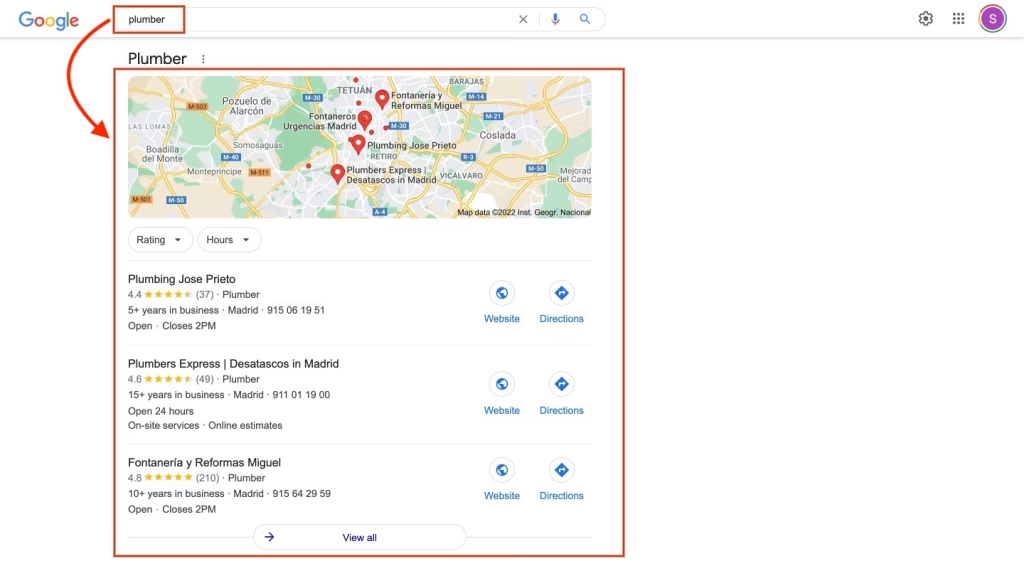
Your Google Business Profile does most of the heavy lifting. It is free, and it is what feeds the map results that sit above the regular listings. Fill it out completely, keep the hours right, add photos of finished jobs regularly rather than once at setup, and reply to every review. A profile that has been touched this month outperforms one that was filled in two years ago and abandoned.
Write for the searches people actually type. Not "bathroom remodeling" but "bathroom remodel San Clemente." Build a real page for each service instead of stuffing everything onto one page, because Google ranks pages, not businesses. If you serve specific pockets of town, Talega, Forster Ranch, the pier area, downtown, say so on the page and mean it.
Use what you know about building here. The salt air, the older stock in the north end, hillside lots, city permitting: writing plainly about how those things affect a job is the fastest way to sound like a local instead of a franchise. A roofer explaining which materials actually hold up a few blocks from the water is doing SEO and sales at the same time.
Keep your name, address and phone identical everywhere. Your site, your Google profile, and the directory listings should match down to the abbreviation. Mismatched listings muddy the signal and cost you map visibility. We wrote more on that in citation building 101.
Proof That You Are Who You Say You Are
Homeowners are letting a stranger into their house. Put the reassurance where they will see it.
- License number and insurance in the footer of every page, not buried on the about page.
- Reviews with detail. A review that mentions you showed up when you said you would, cleaned up, and handled a surprise well carries far more weight than five stars and the word "great."
- Replies to the bad ones. A calm, specific response to a complaint tells the next reader more about you than the complaint does.
- A real service area. List the cities you cover and show a map. If you work out of your truck and not a storefront, that is normal, just be clear about where you work.
Set expectations while you are at it. One line like "we return every call the same business day" does more for trust than a paragraph about our commitment to excellence, and it is easy to keep.
What to Ask Before You Hire a Web Designer
Plenty of people can make you something that looks nice. Fewer have built for trades. Before you sign anything, ask:
- Who owns the site and the domain if we part ways? The answer should be you. Get it in writing.
- Will each service get its own page? One page listing eight services will not rank for any of them.
- How fast will it load on a phone? Ask them to run a speed test on a site they built and show you the result.
- Who handles my Google Business Profile? A website alone will not get you into the map results.
- What happens when I need a change? If updating a phone number takes two weeks and a change order, keep looking.
The Short Version
The contractors winning work in San Clemente are not always the biggest or the cheapest. They are the ones a homeowner can find in the map results, size up in thirty seconds from real photos of real jobs, and reach with one tap. Everything else on your website is decoration.
Start with the parts you control today: better photos, a faster site, a phone number that is impossible to miss, and a Google Business Profile you actually maintain. That is most of the gap.