Most contractors ask which one is better. That is the wrong question. A drag-and-drop builder and a custom build are two different trades, and the right pick depends on what your business will need eighteen months from now, not on what looks cheapest this week.
I build custom sites for a living, so you already know where I land. But I have also told people to go use a builder and call me in two years, because that was the right answer for them. Here is the real trade, without the sales pitch.
What a Website Builder Actually Gets You
A builder is a subscription. You pick a template, drop in your logo, your phone number and a list of services, and you are online. Hosting, security patches and platform updates are handled for you.
- Live in days, not weeks. If you need a phone number and a service list on the internet by Friday, a builder does that.
- No developer required. You can change your hours or swap a photo yourself, from your phone, at 9pm.
- One predictable bill. No upfront project cost to float while work is slow.
- Maintenance is somebody else's job. The platform keeps itself patched.
The catch is that you are renting, and the rent comes with rules.
- You get the template, not a strategy. The layout was designed for a generic small business, so your best-margin service sits in the same box as everything else.
- Technical SEO has a ceiling. You can usually edit a title tag. Getting real control over schema, redirects, canonical tags and page structure is another matter.
- Speed is capped by the platform. The page loads what the platform decides to load.
- Leaving is harder than joining. Exports rarely come out clean, and the design does not travel at all. When you outgrow it, you are usually starting over.
What a Custom Build Actually Gets You
A custom site is a project. Someone maps out how you actually sell, which services make you money, which cities you want calls from, and builds pages around that instead of around a template.
- The layout follows your sales process. Your highest-margin work gets the top of the page and the strongest call to action.
- Full technical control. Schema markup, clean URLs, 301 redirects from an old site, a real sitemap, individual location pages for each city you serve.
- You own it. The code, the content, the domain. You can change hosts or change agencies and take the site with you.
- Integrations that fit your shop. Booking, CRM, call tracking, a quote calculator, whatever the job actually needs.
And the honest downsides:
- It costs more upfront. You are paying for design and build time, not for a seat on a platform.
- It takes weeks, not days. Content, photos, structure and testing all take real calendar time.
- It needs your input. Nobody can write your service descriptions or hand over job photos except you. This is where most builds stall.
- Somebody has to maintain it. Either you keep a relationship with whoever built it, or you find someone who can pick it up.
The Comparison, Side by Side
| Factor | Website Builder | Custom Build |
|---|---|---|
| Cost shape | Monthly subscription, forever | Upfront build, then hosting |
| Time to launch | Days | Weeks |
| Design | Template, lightly customized | Built around your services |
| SEO control | Basic fields, platform limits | Full technical control |
| Speed | Whatever the platform ships | Tunable, and measurable |
| Ownership | You rent it | You own the code and content |
| Who updates it | You, in the editor | You or your builder, depending on setup |
| Moving later | Usually a rebuild | Move the files, keep the site |
The Three Things That Bite Local Businesses Later
1. Ownership
This one costs the most and gets thought about the least. If the design, the code and the content live inside a platform account, you do not have a website, you have a subscription that looks like one. The test is simple: if you stopped paying tomorrow, what would you still have? On a custom build the answer is everything. Read more on who owns your website and marketing.
2. Speed on a phone in a driveway
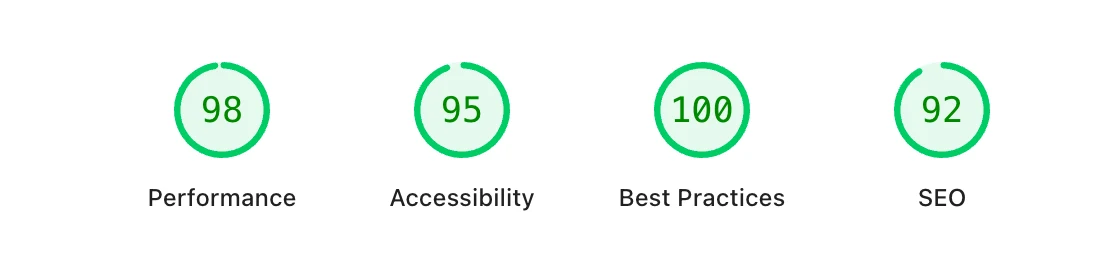
Your customer is standing in their driveway looking at a leak, on cell service, with one bar. If your page takes five seconds to paint, they hit back and call the next result. Builders load a lot of code you did not ask for. A custom build loads what the page needs and nothing else, and you can prove it with a public tool.
3. Location pages
If you work San Clemente, Dana Point, San Juan Capistrano and Laguna Niguel, you need a real page for each one, with its own content and its own reason to exist. Not one service-area page listing eight city names in a row. Builders make thin duplicate pages very easy to create and very hard to do well. This is usually the moment a growing contractor outgrows the platform.
When a Builder Is the Right Call
Use a builder if most of this sounds like you:
- Nearly all of your work comes from referrals and repeat customers
- You serve one city and have no plans to expand
- The site is there so people can confirm you are real and find your number
- Cash is tight and an upfront project is not realistic right now
That is a legitimate answer. Get online, get your Google Business Profile in shape, go do the work.
When a Custom Build Pays for Itself
- You want the site to generate calls, not just confirm you exist
- You serve multiple cities and want to rank in each one
- You are spending money on SEO or ads and the site is the bottleneck
- You need something the platform will not do: booking, financing, a quote tool, a CRM handoff
- You are hiring, adding crews, or planning to sell the business one day
The Short Version
If the website is a business card, rent one. If the website is supposed to bring you work, own it.
How to Decide in Ten Minutes
Answer these four honestly and the choice usually makes itself:
- Where did your last ten jobs come from? If none of them found you on Google, a custom build is not your first problem.
- How many cities do you want calls from next year? More than one means you need pages a builder struggles to do properly.
- What would you keep if you cancelled your platform tomorrow?
- What is one job worth to you? Set that next to the cost of a build. If two or three extra jobs a year would cover it, the math is not complicated.
Whichever way you go, the site is only half of it. Getting found still comes down to your Google Business Profile, your reviews, and consistent local SEO. A great website nobody can find does not ring the phone either.